
DIVA For Equality From Survival to Solidarity:
How Pacific Feminists Are Rewriting Power, One Body and One Community at a Time
By the time Vivalesi first walked into the office of DIVA for Equality in Nadi, Fiji, she was not thinking about feminism, movements, or policy change.
“I didn’t come in as an activist,” she said during the interview. “I just wanted to help. I thought maybe I could answer phones, do admin, just be useful.”
At that point in her life, survival was the priority.
Vivalesi known as Viva to many is a survivor of severe domestic violence. She spoke openly about being in a heterosexual relationship that almost cost her her life. Later, when she entered a same-sex relationship, the violence shifted form. Her family rejected her. At home, even her plates and cups were separated.
“My utensils were not allowed to mix with everyone else’s,” she recalled. “And then I didn’t have a home for a while.”
Today, Viva is a co-director of DIVA for Equality, one of the Pacific’s most influential feminist organisations working at the intersection of gender justice, climate justice, sexual and reproductive health and rights, and LGBTQI inclusion across Fiji and the wider Pacific.
Her journey, like DIVA’s, is not one of abstraction but of lived experience turned into collective power.
DIVA for Equality was founded in 2011 in Nadi by ten lesbian, gender non-binary, and transmasculine individuals with prominent figures including Noelene Nabulivou, and Shirley Tagi, the Coordinator. They established the group to advocate for human rights and social justice for marginalized women and gender diverse people in the Pacific.
What began as a small, values-driven organization has grown into a feminist network working across 121 villages in Fiji, including maritime and informal settlements, and in partnership with over 250 organizations across the Pacific.
Yet for Noelene, numbers are not the point.
“Human rights live in the body,” she said during the conversation. “Everything we talk about, violence, poverty, and climate change people experience it in their bodies.”
That belief underpins DIVA’s feminist approach, (1) embodied,(2) intersectional and (3) interlinked.
“You can’t talk about economic justice without climate change. You can’t talk about climate change without talking about gender,” Noelene said. “These things don’t sit in silos in our lives.”
Noelene’s feminist consciousness began early. She grew up attending community meetings with her parents, who were deeply involved in faith-based peacebuilding.
“I remember sitting there as a child and feeling angry,” she said. “Angry about how girls were treated, how women were spoken over. I didn’t have the language, but I knew something wasn’t right.”
She became a feminist activist at 16, a commitment that has now spanned more than four decades.
“I’ve been doing this work since I was very young,” she said. “Paid work, unpaid work because justice is not something you retire from.”
Despite DIVA’s grassroots reach, Noelene said misconceptions about feminism persist often not in villages, but among elites.
“Grassroots women may not use the word ‘feminism,’ but they live it,” she explained. “The pushback usually comes from people who think feminism is immoral, or that it’s about hating men.”
She was clear in her rebuttal.
“Feminism is about justice. It’s about liberation. It’s about ecological balance,” she said. “And yes it challenges patriarchy. That’s why it makes people uncomfortable.”
DIVA’s approach, she added, is to make feminism accessible.
“We use vernacular language. We start with foundational knowledge. We connect it to people’s daily realities,” she said. “Otherwise it stays academic and disconnected.”
For Viva, feminism was not something she learnt in a book. It was something she stepped into.
After joining DIVA initially in a support role, she attended her first regional feminist meeting.
“I sat there listening to women talk, and I realised if I don’t speak about my issues, people like me will never be represented,” she said.
That moment changed everything.
“Before that, I stayed behind the scenes,” she said. “But feminism gave me the courage to speak. To say: this happened to me.”
Her activism quickly became practical and collective.
When lesbian rugby players in Fiji faced discrimination and the loss of contracts because of their sexuality, Viva helped mobilise support.
“We were fundraising so they could keep playing,” she said. “That wasn’t a theory. That was about dignity and survival.”
In the Pacific, feminist work is inseparable from climate justice.
“Climate change is not gender neutral,” Noelene said. “Women are carrying the burden — water, food, care, displacement.”
She stressed that Pacific feminists have had to fight for space in international climate forums.
“We work in a patriarchal world,” she said. “So sometimes we have to be tactical just to get into the room. But once we’re there, we don’t apologise for being feminist.”
Their advocacy has centred on gender-just climate finance, loss and damage reparations, and direct access to funding for grassroots communities.
“Money doesn’t reach the people who need it most,” she said. “And when it does, it’s full of barriers.”
That gap, both women said, is where PIFA4CJ made a critical difference.
“PIFA4CJ listens to communities,” Noelene said. “They don’t come in telling us what to do.”
The grants, she explained, are fast, flexible and grounded in trust.
“The money moves quickly, to what communities themselves have identified as urgent,” she said. “Without excessive paperwork.”
Viva described the impact plainly.
“It meant people could fix things immediately like access to water, food, safety,” she said. “Not wait years.”
PIFA4CJ also enabled Pacific feminist leaders to be visible on the global stage.
“It allowed grassroots women to go to COP,” Viva said. “To speak for themselves, not be spoken for.”
This is one area where PIFA4CJ has played a catalytic role.
For DIVA and allied Pacific feminist networks, the impact has been tangible.
PIFA4CJ funding has:
- Enabled direct support to community-led climate solutions — water tanks, boreholes, food security initiatives without waiting for state systems to respond
- Allowed grassroots feminist leaders to attend COPs and regional negotiations, ensuring Pacific realities are represented where decisions are made
- Created safer, trauma-informed spaces for activists dealing with burnout, violence and grief
- Strengthened coalition-building across Indigenous women, LGBTQI+ groups, youth, women with disabilities and sex-worker advocates
- Helped translate the 17 urgent demands of Pacific feminists defending the living planet into visible, collective political pressure
“PIFA4CJ didn’t just fund projects,” Viva says. “It funded trust. It said: we believe you know what your community needs, that belief is rare and powerful.”
Just as importantly, the support created space for care.
“Our activists are tired,” Noelene said. “We carry trauma. PIFA4CJ made it possible to create safer spaces — to breathe, to heal, and then keep going.”
Today, DIVA for Equality continues to work across bodies, communities, networks, and borders — from villages in Fiji to UN climate negotiations.
It is slow work. Often heavy work.
“Feminism forces you to confront your own trauma,” Viva said. “And the systems that benefit from silence don’t like that.”
But neither woman sees stopping as an option.
“We are already doing peacebuilding,” Noelene said. “The systems just don’t recognise it.”
For Viva, the journey has redefined belonging.
“I lost my family once,” she said quietly. “But I found another one. A feminist family.”
In a region confronting climate loss, shrinking civic space, and persistent violence against women, that collective and the solidarity that sustains it may be one of the Pacific’s strongest forces for justice.
Sailing the Waves on Our Own:
Ursula Rakova and the Carteret Islanders’ Fight for Climate Justice
The crashing waves on the shores of the Carteret Islands in Bougainville, Papua New Guinea, no longer bring a sense of serenity—they bring fear. For the women who live there, each rising tide is a call to action, a warning that their children’s lives hang in the balance.
“When the tides rise, we tie our fishing nets around our houses to stop the waves from carrying our children away,” says Ursula Rakova, her voice steady with the weight of lived experience.
Ursula is the Executive Director of Tulele Peisa Incorporated, a grassroots organization founded by Carteret Island elders. The name means “sailing the waves on our own,” and it reflects both the spirit of independence and the urgency of survival. These islands, home to about 1,500 people, now sit on the frontlines of the climate crisis—an atoll disappearing under rising seas and relentless erosion.
For the Carteret Islanders, climate change is not a future threat—it is their daily reality. Sea-level rise, saltwater intrusion, and storm surges have turned once-fertile gardens into barren swamps. Giant swamp taro, their traditional staple, has been destroyed. Some islands have already split in half due to strong ocean currents.
“It is a feeling of anxiety,” Ursula explains. “Knowing that tomorrow may never come. The sea is not just rising — it is taking our homes, our food, and our sense of security.”
Boats capsizing in dangerous waters have taken lives. King tides cause sleepless nights, as families fear waking up to find their homes washed away. The mounting psychological toll makes clear the need for urgent and dignified relocation—not just to survive, but to live without constant fear.
At the heart of this resilience movement are women and youth. Under Tulele Peisa’s leadership, more than 6,000 mangrove seedlings have been planted across four community wards. Using innovative methods—cluster, V-shaped, and octagon planting—they are restoring coastlines, creating fish nurseries, and locking in blue carbon.
“Women are excited about planting mangroves and building sea walls,” Ursula says.
But she warns: “We cannot build sea walls because if we build sea walls we are basically going to fast-track the destruction of shoreline erosion. We will only have to start planting mangrove seedlings if we want to ensure that the islands continue to contain the strong current.”
These women are not just environmental stewards—they are cultural guardians. They are documenting traditional knowledge about breadfruit, wind, rain, and fish breeding, turning oral histories into early childhood education materials. These stories pass down wisdom, discipline, and deep respect for the environment.
Meanwhile, women are also building economic resilience—through crafting shell necklaces, tailoring, and other livelihoods. Every effort is rooted in the belief that resilience must be holistic—ecological, cultural, and economic.
Ursula’s path has not been easy. As a woman in a patriarchal society, her leadership was met with resistance and suspicion.
“They accused me of running a parallel relocation program to the government,” she recalls.
“Of selling the islands to foreigners. Of trying to destroy the community.”
Leaders asked, “What can she do? Where will she get help from?”
But Ursula stood firm. She built trust by working alongside her people—planting mangroves, sharing stories, and empowering others. International support—from churches, foundations, and regional feminist alliances like PIFA4CJ—amplified her work. And with every seedling planted, every story preserved, she redefined what leadership looks like: inclusive, rooted, and deeply feminist.
Following the Pacific Feminists Defending the Living Planet Conference, Tulele Peisa applied for a small grant, to support the ongoing work in the community:
- Document traditional stories now being developed into school teaching manuals.
- Provide leadership training for community and ward members, helping young people assess leaders based on values and accountability.
- Scale mangrove reforestation projects, including the cultivation of a rare yellow mangrove species.
“The grant is a very big help,” Ursula shares. “It allowed us to move our stories, our mangroves, and our leadership vision forward. For that, I am so thankful.”
But Ursula knows grassroots efforts must be matched with institutional change. Tulele Peisa continues to push for a formal relocation policy in Papua New Guinea and Bougainville—one that ensures climate-affected communities are relocated with dignity, cultural integrity, and agency.
“A relocation policy is not just about moving people,” she says.
“It’s about protecting culture, identity, and humanity itself.”
Sailing the Waves Together
Ursula envisions a future where the Carteret Islanders live safely and sustainably—whether on their ancestral islands or in new homes—without losing who they are.
“We are building resilience for our children and their children,” she says.
“This is about survival, but also about dignity.”
Tulele Peisa’s journey is a powerful testament to feminist climate justice in action. By centering women, honouring culture, and embracing community-led solutions, Ursula Rakova and her people are showing the world what true resilience looks like.
They are not just climate victims. They are navigators of their own destiny, sailing the waves together.
Rising with the Tide:
How Nei Mom is Redefining Women’s Resilience in Kiribati
On a sweltering afternoon in South Tarawa, Lily Brechtefeld Kumkee sits beneath a pandanus tree, surrounded by quiet voices and tired eyes. Young mothers gather around her—some cradling babies, others staring at the ground, unsure if they are allowed to speak.
For many, it’s the first time anyone has asked them what they need, what they dream of, or how they are surviving the daily struggle of being a woman in Kiribati.
Lily knows this silence intimately. She once lived inside it.
As a teen mother, she faced the sharp sting of stigma—the whispers, the isolation, the abrupt end to her education. But instead of shrinking into the shadows, Lily chose a different path. Alongside two friends, she founded Nei Mom: a sanctuary, a support system, and eventually, a movement.
What began with three women standing together has grown into a sisterhood of over 300 members, reaching across nearly half of Kiribati’s scattered islands.
In its early days, Nei Mom was about reclaiming dignity. It was about survival—helping young mothers return to school, learn skills like sewing or baking, and begin small businesses to support themselves.
But as the group grew, a harder truth surfaced: the climate crisis was rapidly unraveling the lives of these women.
Gardens once full of cassava and pawpaw were now salted and barren. Wells ran dry as saltwater seeped in. Heavy rains tore through fragile homes. Even the once-abundant fish and seashells that nourished families were vanishing from the lagoon.
“Women were already carrying the burden of stigma,” Lily explains, “and now they were carrying the weight of survival itself.”
Nei Mom could not ignore this double injustice—of societal shame and environmental collapse. They had to evolve.
Nei Mom began to adapt. Resilience, they realized, wasn’t just about income. It was about survival in a warming world.
Training sessions on rainwater harvesting, food security, and home gardening became central. Women began documenting coastline erosion, tracking family relocations, and noting how hunger and thirst were growing more common.
Out of these hard conversations, something remarkable emerged: courage.
Women who had once felt invisible began to speak in village meetings. Their voices—tentative at first—soon connected the personal with the political, linking their daily hardships to the broader climate crisis facing their nation.
In a culture where power still leans heavily toward men, this was radical. But Nei Mom wasn’t confrontational—it was quietly revolutionary. They embraced what Lily calls a:
“soft feminism”—a strategy of working within cultural boundaries, engaging men as allies, and slowly opening spaces for women’s participation.
This feminism doesn’t shout. It listens, it nurtures, and it transforms.
Healing Body and Spirit
But Nei Mom also understood that resilience starts within.
In Kiribati, diseases like diabetes and heart conditions are widespread. So Nei Mom introduced fitness programs, body confidence workshops, and nutrition education—not just to fight illness, but to restore a woman’s connection to her body, to her worth.
For young mothers juggling childcare, chores, and community expectations, these sessions became sacred.
More than exercise, they are acts of defiance, self-love, and healing in a society that often demands women give everything, while expecting nothing in return.
Now, Nei Mom is stepping into a bold new chapter.
With PIFA4CJ they’ve extended their reach to women on the outer islands, collecting stories, data, and dreams—laying the groundwork for something unprecedented:
A grassroots, women-led climate change policy for Kiribati.
Their approach:
- Listen first – gathering firsthand stories and concerns from women across remote islands.
- Document change – recording the disappearing coastlines, shifting weather, and vanishing food systems women see every day.
- Engage government – presenting a policy grounded in women’s lived realities and demanding that leaders uphold their promises.
From teen mothers once silenced by shame to bold climate leaders shaping national policy, Nei Mom’s journey is nothing short of extraordinary.
They are no longer simply reacting to crisis. They are defining what resilience looks like—in bodies, in communities, in policy.
They are proving that when women rise—softly, steadily, together—they do not just adapt to the tide.
They rise with it.
Every Day is a Preparation Day”:
How Tuvalu Women for Change is Building Resilience at the Frontlines of the Climate Crisis
When Filiga Taukiei Nelu, Secretary General and co-founder of Tuvalu Women for Change, reflects on life in her island nation, one truth rises above all:
“Every day is a preparation day for women in Tuvalu.”
On this slender thread of land in the central Pacific, climate change is not an abstract threat—it is a daily battle. Weather swings violently between scorching sun and sudden rains. Sea travel grows treacherous. Salt-laced soil poisons crops. Fish vanish from once-rich waters.
And always, it is women who bear the heaviest weight—keeping families afloat while facing systemic inequality, limited economic power, and the silent crisis of gender-based violence.
Filiga’s understanding deepened during her five years working in Tuvalu’s Office of the People’s Lawyers.
“I spent five years in that office and started to realise the reality of what women face on the ground,” she said.
“For instance, the quiet and deadly infiltration of domestic violence in the lives of the women and the children in Tuvalu, the unfair distribution of some of the work to women.”
Despite Tuvalu’s peaceful appearance, behind closed doors a toxic pattern persists—violence, silence, and imbalance—deepened by the pressures of climate change.
“Then with the issue of climate change, it made things a lot worse for women who are staying at home, including those who have 8 to 5 jobs—they continue on when they reach home,” she said.
In 2019, Filiga took action. Alongside a group of close friends, she launched Tuvalu Women for Change, a grassroots movement guided by one mission:
“To Be The Change.”
At its core lies a simple but powerful goal—to make women’s voices visible.
Today, the organization has become a lifeline for women navigating the intertwined challenges of climate disaster and gender injustice.
In 2024, Filiga attended the Pacific Feminists Defending the Living Planet conference—the only participant from Tuvalu.
There, she immersed herself in conversations around climate justice, “loss and damage,” and feminist advocacy. But returning home, she faced a challenge:
How do you translate these big global terms into something that resonates with women on the ground?
She rose to the task.
Through community dialogues and story-sharing, Tuvalu Women for Change is transforming global discourse into local empowerment—making sure that Pacific women’s voices shape the decisions that affect their futures.
Through the Conference, she connected with PIFA4CJ. With a grant of AUD40,000 they have been able to expand their reach beyond the capital, Funafuti, to the remote northern islands of Nanumea, Nanumanga, and Niutao:
“With the PIFA4CJ funds we were able to travel to the outside islands and start creating awareness on climate change, including gender-based violence on all the three islands, and we have started membership that includes both men and women,” Filiga shared.
In each community, women gathered to share their needs—and at the top of their lists: food security and resilience.
Some requested support for community gardens that could survive soil salinity. Others turned to poultry farming to reduce dependency on imported food.
These are more than survival strategies. They are acts of feminist climate leadership, rooted in women’s lived knowledge and priorities.
The PIFA4CJ grant funded travel, community gatherings, and even t-shirts with climate justice messages—sparking conversations and raising awareness. But most importantly, it helped bring women from remote islands into national forums, bridging the gap between their lived realities and national policies.
In Tuvalu, ancestral knowledge has long guided survival. Women still read the skies—knowing that a red sunset promises a dry tomorrow. They recycle water, anticipate droughts, and shift their routines according to subtle natural cues.
Tuvalu Women for Change honours this wisdom, blending it with training in water conservation, early warning systems, and climate education.
“So when we do programs with women, we really focus on capacity building, how to be resilient. For instance, how can we manage the water well? So, we focus on early warning systems, on water management and conservation,” said Filiga. “Because when drought all of a sudden kicks in, we can be ready—and what ways can we recycle the water that we use at home?”
In a place where every drop of water is precious, preparedness is power.
For Filiga, the work is deeply personal. Raised by a single mother, she grew up watching resilience in action. That upbringing taught her one enduring lesson: women are changemakers.
But her time in government exposed the shadows behind Tuvalu’s peaceful image—domestic violence, unfair wealth distribution, and the erasure of women’s voices.
These injustices are at the heart of Tuvalu Women for Change’s mission. Alongside climate justice programs, the organization works to:
- Address gender-based violence
- Advocate for inclusive economic policies
- Build safe spaces for women and girls
This year, they achieved a major milestone: the opening of Tuvalu’s first women and girls’ centre—a safe haven, a training space, and a beacon of hope.
The path is not easy.
Tuvalu’s remoteness makes travel and outreach expensive. Traditional mindsets still push back against feminist organizing. And economic barriers—like lack of access to credit or the high cost of goods—continue to limit women’s independence.
But the women of Tuvalu Women for Change persist.
Because for them, resilience must mean more than survival— It must mean justice, dignity, and opportunity.
“Every day is a preparation day,” Filiga says.
But in that daily preparation lies strength, solidarity, and a fierce determination to build a Tuvalu where women are not only enduring the climate crisis,
but leading the charge to overcome it.
Resisting Militarization, Building Resilience:
Sheila Babauta and Feminist Climate Justice in the Marianas
In the Northern Mariana Islands, daily life is constantly disrupted by forces beyond any single community’s control—super typhoons intensified by climate change, sweeping U.S. military expansion, and sudden political shifts like the passing of a governor. For Sheila Babauta, founder of Alpha Day Tiro and daughter of Saipan, these overlapping crises offer both a warning and a call to arms: the fragility of her people is real, but so is their resilience.
“We are constantly asked to stretch beyond our capacity,” Sheila says
“Our women are caregivers, organizers, and leaders. We carry the burdens of militarization, climate disasters, and family responsibilities. And yet, we keep going.”
The Marianas are among the most heavily militarized regions in the Pacific. On Tinian, two-thirds of the land is leased to the U.S. military—leaving scarce space for local communities. For women, the consequences are deeply personal: displacement, environmental degradation, and mounting health crises. Cancer rates remain alarmingly high. The toll taken on “women’s bodies and health,” as Sheila describes, grows heavier with every military exercise, every environmental impact assessment, every unseen spill.
Responding to Department of Defense statements, mobilizing communities during military drills, and documenting harms often becomes women’s work—stacked atop their unpaid labor in homes and families. The emotional and physical exhaustion runs deep.
“Hyper-militarization divides our communities and disrupts our culture,” Sheila explains.
“But women are leading the response—organizing, documenting, and insisting that our leaders hear us.”
Despite monumental obstacles, Sheila and her team are building collective resistance. With support from the Pacific Islands Feminist Alliance for Climate Justice (PIFA4CJ), they have convened women leaders across the Marianas—activists, single mothers, LGBTQIA+ organizers, elders, and youth—for conversations on militarization, climate justice, and community needs.
The grant has been transformative in breaking down geographic isolation. It pays for inter-island travel, a barrier that otherwise isolates communities. A 30-minute flight from Guam to Saipan can cost $450; a 15-minute hop between nearby islands can reach $80 each way.
“With this grant, I can say to a woman leader in Tinian or Rota, ‘We’ll cover your flight. You belong here with us,’” Sheila says.
“That’s huge. Otherwise, some people go decades without visiting another island.”
It also provides stipends for volunteers and facilitators, supports local businesses via lodging and catering, and carves in space for healing and rest—something Sheila insists is critical to sustaining activism.
“This is not just about activities or strategy,” she says.
“It’s about showing a different way of organizing—valuing people’s time, recognizing their labour, and modelling what true support can look like.”
The culmination of their work was a September 2025 gathering on Saipan—a multi-island convergence of activists and community leaders. The agenda is ambitious and necessary:
- Healing practices and rest sessions to address burnout and trauma
- Strategy workshops on militarization, climate change, and women’s rights
- Feedback sessions on demands developed at the Pacific Feminists Defending the Living Planet conference
- Media documentation (photos, audio, video) to amplify community voices
- Relationship-building with regional allies like DIVA for Equality Fiji
These spaces are built on months of groundwork—outdoor dialogues, indoor sessions, and even virtual collaboration—all designed to overcome the financial and geographic barriers of inter-island connection.
“These spaces are about more than strategy,” Sheila reflects.
“They’re about rest, trust, and weaving our stories together so we can face the overwhelming challenges ahead—without starting from scratch every time.”
For Sheila, the impact of the grant goes far beyond covering logistics. It’s shifting the narrative of what community work looks like in the Marianas.
- Instead of isolating islands and inciting competition over scarce resources, this work is collaborative
- Instead of ignoring women’s often invisible labor, stipends honor and recognize it.
- Instead of focusing solely on crisis, the gatherings also make room for joy, connection, and intergenerational knowledge.
“It’s a shift in how we relate to one another,” Sheila explains.
“We are modelling what it means to resist militarization and climate injustice in a way that is healing, feminist, and deeply rooted in our culture.”
Sheila’s vision stretches beyond the Marianas. The next steps will be to compile the community feedback into regional feminist demands, prepare materials for elected officials, and deepen connections with Pacific allies.
As a former lawmaker, Sheila is skilled at bridging community advocacy and institutional engagement:
“Elected officials are overwhelmed too. We need to provide them with support, information, and perspectives they don’t often get,” she says.
“We’re not just presenting problems—we’re offering pathways.”
By tying local struggles to regional and international platforms—such as the Commission on the Status of Women or recent International Court of Justice rulings on climate change—Sheila ensures that Marianas women’s voices echo in the global fight for justice.
At its core, Sheila’s work is about protecting home—the land, the ocean, the culture—while empowering women to lead. It is not enough to resist militarization with protests or petitions. True resistance must root itself in healing, collaboration, and feminist values.
“Resilience is not just surviving storms or military pressure,” Sheila says.
“It’s about creating futures where our daughters don’t have to choose between caring for their families and defending their islands. That’s the heart of feminist climate justice.”
“Weaving Resilience, Claiming Justice”:
How Pacific Feminists Are Rewriting the Climate Agenda
At the frontline of the climate crisis, Pacific women are not waiting to be saved—they are leading. Through the Pacific Islands Feminist Alliance for Climate Justice (PIFA4CJ), women are building alliances across oceans, weaving grassroots leadership into regional advocacy, and turning feminist visions into concrete climate action.
The movement is a feminist funding platform to women and girls in communities most affected by climate breakdown—and doing it with care and accompaniment.

“PIFA4CJ has a very strong gender justice and feminist model. It is like a basket that carries us.., we are weaving together a basket, because we have to carry each other.
It is going to be the urgent short term and long term work”
Noelene Nabulivou
Executive Director of DIVA for Equality
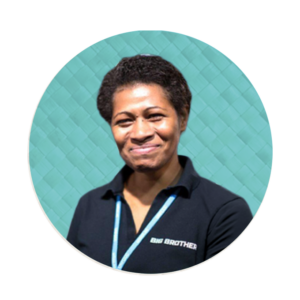
“Having these resources or grant available allows us to support the community but at the same time our support is not from a donor driven (approach) … we are accompanying communities, we work with them on their proposal, we understand where they are coming from, but they make the decision, understanding what they want for their community and the grants will actually meet their priorities,”
Frances Namoumou
Program Manager Pacific Conference of Churches
Direct Grantmaking Has Supported:
- LGBTQI+ Community Consultations: Inclusion in disaster risk reduction (DRR) policy-making
- Women-led, community-rooted initiatives, like the Women and Water Crisis Project in Tuvalu, combining ecological stewardship and faith-based activism
- Young women leaders and climate activists working within indigenous governance structures
In 2025, the Movement Led Committee (MLC) directly received AUD 40,000 to carry out locally designed initiatives including:
- Nei Mom Uprising! (Kiribati)
- Pacific Conference of Churches
- Shifting the Power Coalition Steering Committee
- Talitha Project (Tonga)
- Vanuatu Disability Promotion and Advocacy
What We Learned
Through convenings with nearly 100 women from American Samoa, Kiribati, Tonga, Vanuatu, Nauru, and the Marshall Islands, PIFA4CJ heard urgent stories about climate realities on the ground. Key concerns raised include:
- Intensifying sea-level rise, coastal erosion, and drought
- Lack of resilient, accessible infrastructure, especially for women and people with disabilities
- Burden of unpaid care work and growing gender-based violence
- Loss of cultural identity and heritage
- Need for climate security, including safe access to water, food, and health
Participants shared rising fears of insecurity for young girls forced to travel longer distances for school, and food shortages that are increasing vulnerability to gender-based violence in households.
“We have heard directly from women in Kiribati through the Nei Mom Uprising convening that Climate Security priorities include mediating in community displacement; the loss of traditional land and homes are causing conflicts due to crowding and land access.”
PIFA4CJ
According to a report by UN Women disasters create conditions that intensify pre-existing SHBV risk factors such as stress and trauma, both of which are heightened following disasters, and both of which reduce normal coping capacities and heighten the risk of violent response to pressure or strain.
These social issues are the result of the direct impact of climate change in communities,
These conversations echoed findings from the Landscape Survey and reinforced what women already know: they are central to climate resilience and deserve the resources to lead.
Impacts of the Initiatives supported by PIFA4CJ
The convenings and grants created real momentum. They filled a critical gap in funding for Pacific women-led climate work. According to a policy brief by UNDP: Linkages Gender and Climate Change and UN Women, women face disproportionate impacts of climate change due to entrenched gender roles. Women tend to be overly burdened with household work and caring for children, the sick and the elderly. Yet climate financing rarely benefits them directly. PIFA4CJ is changing that.
Key Impacts:
- Grassroots self-determination in Kiribati: Women called for dedicated, flexible funding for leadership, advocacy, infrastructure, and innovation.
- They’re now demanding transparent, accountable climate financing mechanisms.
- Leadership ripple effects in Niue:
- Jamal Talagi’s work has helped wives of village chiefs organize, contribute to DRR solutions, and advocate before national decision-makers.
- National and regional visibility: Women-led initiatives are not just responding—they are shaping local and national policies.
PIFA4CJ will continue to support grassroots organizations with:
- Capacity building for strategic climate advocacy
- Inclusive policy co-design rooted in gender, disability, and cultural justice
- Advocacy to hold governments accountable to their CEDAW and climate treaty obligations
“What we are learning since the establishment of the alliance is the values of co-creating Pacific Island financing models that enable continuous dialogue, learning, documentation, and advocacy-advancing a feminist climate justice agenda across the Pacific.”
PIFA4CJ
The goal is not only to adapt to the crisis—but to lead the transformation with feminist values at the center.
While much has been achieved—from mobilizing millions to building community resilience, the work ahead remains critical. As the recent Landscape Study found, civic space and feminist leadership are growing, but implementation gaps remain.
That is why PIFA4CJ is committed to sustaining the momentum, creating more opportunities for Pacific women and girls to shape just climate futures—on their terms.